

I paid to tow it elsewhere. Tesla controlled the policy and channel; no one was empowered to take responsibility. I am still a Tesla shareholder and wanted the company to succeed. In that moment, its system still failed me as a human.
01The mistake
THE MISTAKE
I thought people just didn't want it
In March or April 2025, my brother asked me a simple question: “Why don't more people use AI?”
He and I used it for almost everything. I had spent nearly a decade building AI products, and my use had become especially intense after ChatGPT launched. AI was how I researched, thought, built, and solved problems every day.
My answer came quickly: “People just don't want to. They don't want to learn and grow.”
At the time, I believed it.
A few months later, I realized I had replayed the perspective of the AI industry and the technology bubble around it. We had mistaken a failure to adopt for a failure of curiosity or ambition. We blamed people for not adapting to products that expected them to arrive with the right prompt, the right context, and the confidence to judge whatever came back.
The problem was not that ordinary people refused to learn. The products had not been designed for them.
I had blamed the people for a design failure.
02Left behind
They left ordinary people behind
The industry kept building for the people already using AI: larger models, faster systems, better tools for power users, and more leverage for its own teams and Fortune 500 customers.
Ordinary people were left behind.
The waitress. The truck driver. The grandmother. The college student. They still had money problems, health questions, relationship decisions, confusing paperwork, housing searches, and difficult weeks.
The most powerful technology in the world gave them a blank chat box.
That box looks simple. It is not. People may not know what they want yet, let alone how to phrase it precisely or that they need to supply context. They may not even know what the product can do—especially when its capabilities change from week to week.
Then comes an answer that can be long and overwhelming. They still have to work out what to do with it, and remember it later.
It is a terminal disguised as a consumer product.
Accessibility has been a thread through my whole career: using technology—especially AI—to break barriers, level the playing field, and make powerful capabilities easier and fairer.
03The road trip
The idea arrived on the road
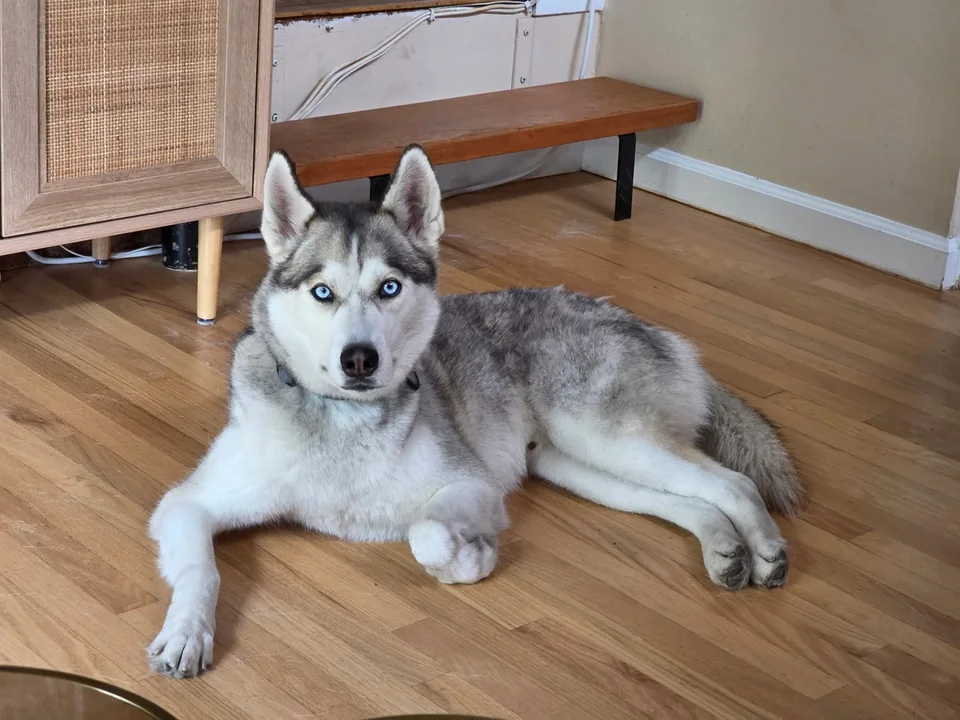
In June and July 2025, I drove across the continent—from Los Angeles to my hometown of Chatham, Ontario, Canada—with my husky, Luke.
The question from my brother came back with a sinking feeling. I was wrong. The tools had not been built for regular people.
Before that fear crystallized, I had been thinking about building an AI-guided physical-merchandise creator that anyone could use. It would walk a person from an idea or need to a finished T-shirt, checkout, and delivery—one calm step at a time.
Then the larger idea landed: this should be the interface to AI itself.
I was also watching extraordinary AI capability concentrate inside the world's largest companies. If a few companies reached superintelligence first and used it to compound their own wealth, infrastructure, and control, they could reach escape velocity. That possibility still concerns me. The correction had to begin somewhere practical: put intelligence and leverage in ordinary people's hands.
At a hotel in Iowa, I sketched the Life Guide on a napkin.
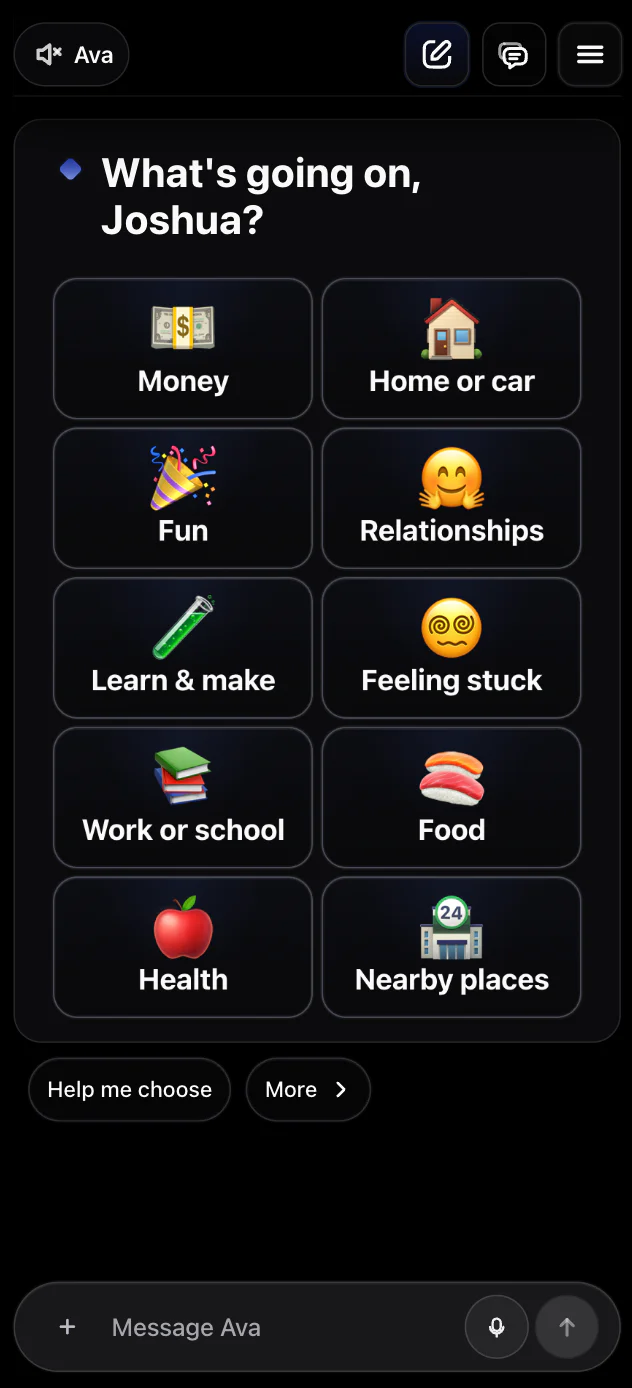
I called it You.one. “You” because the product is about helping you. “.one” because the domain was available and fit; the .com was priced in the millions.
Money. Health. Relationships. Food. Work or school. Home or car. Learning. Fun. Nearby places. Feeling stuck.
Tap the part of life that needs help. See understandable options. Take one calm step at a time.
When a 65-year-old friend—savvy and an occasional ChatGPT user—saw it, she said, “Oh, yours does more than ChatGPT.” It did not. It simply showed her where to begin.
Real guidance. Real care.
04The power gap
The power gap is not abstract
These are not thought experiments. They happened to me within a single year.
This is a critique of institutional priorities and product design—not the people doing the work inside these companies. The person still absorbs the delay, complexity, and cost.
THE SYSTEM · COMPOUNDINGLegal teams · policy engines · data
Automation · AIMore intelligence. More patience. More leverage.
Automation · AIMore intelligence. More patience. More leverage.
THE GAPWIDENS→
THE PERSONOne ticket number.And a life to get back to.
The next wave of automation will widen this gap unless regular people get capable AI working on their side—not only something to chat with, but something that can create clarity, hold the full picture, advocate, and finish loops.
05The counterweight
Put intelligence on the person's side
On that road trip, I imagined something America could have built after World War II: 1-800-HELP.
You could call with anything—even something you felt embarrassed to ask. Someone would listen, understand the situation, and give you a clear next step. Then stay for the step after that.
We never built human care as a service. We built search engines, automated call menus, customer-support bots, and chat windows. Each can answer a transaction. None is responsible for the continuity of a person's life. By care, I mean a product obligation—not a claim about consciousness: remember what matters, tell the truth, protect the person's interests, and keep helping until the loop closes.
1-800-HELPAnything is a valid place to begin.
Listen. Understand. Create clarity. Give the person the next step—and stay for the one after that.
You.one is the attempt to build that missing layer with AI: not an institution pretending to be neutral, but an advocate structurally working for the person.
01Help the person understand.
02Give the mess a durable shape.
03Move reality forward—with the person in command.
They thought care was not profitable. I think care is the opportunity.
06Superboard's origin
The tool I built to build it
While building You.one, I used Trello—a lightweight Board tool I had loved for years—to track features, bugs, ideas, active work, and everything finished.
Then my Board reached roughly 5,000 Cards, and I was told I needed to archive or remove older work.
My reaction was immediate: no. I was not deleting the history of something that mattered because the tool had reached its idea of a reasonable limit.
So I began building a better Board for myself. I called it Superboard. At first it was a separate product: the tool I needed to keep building You.one my way.
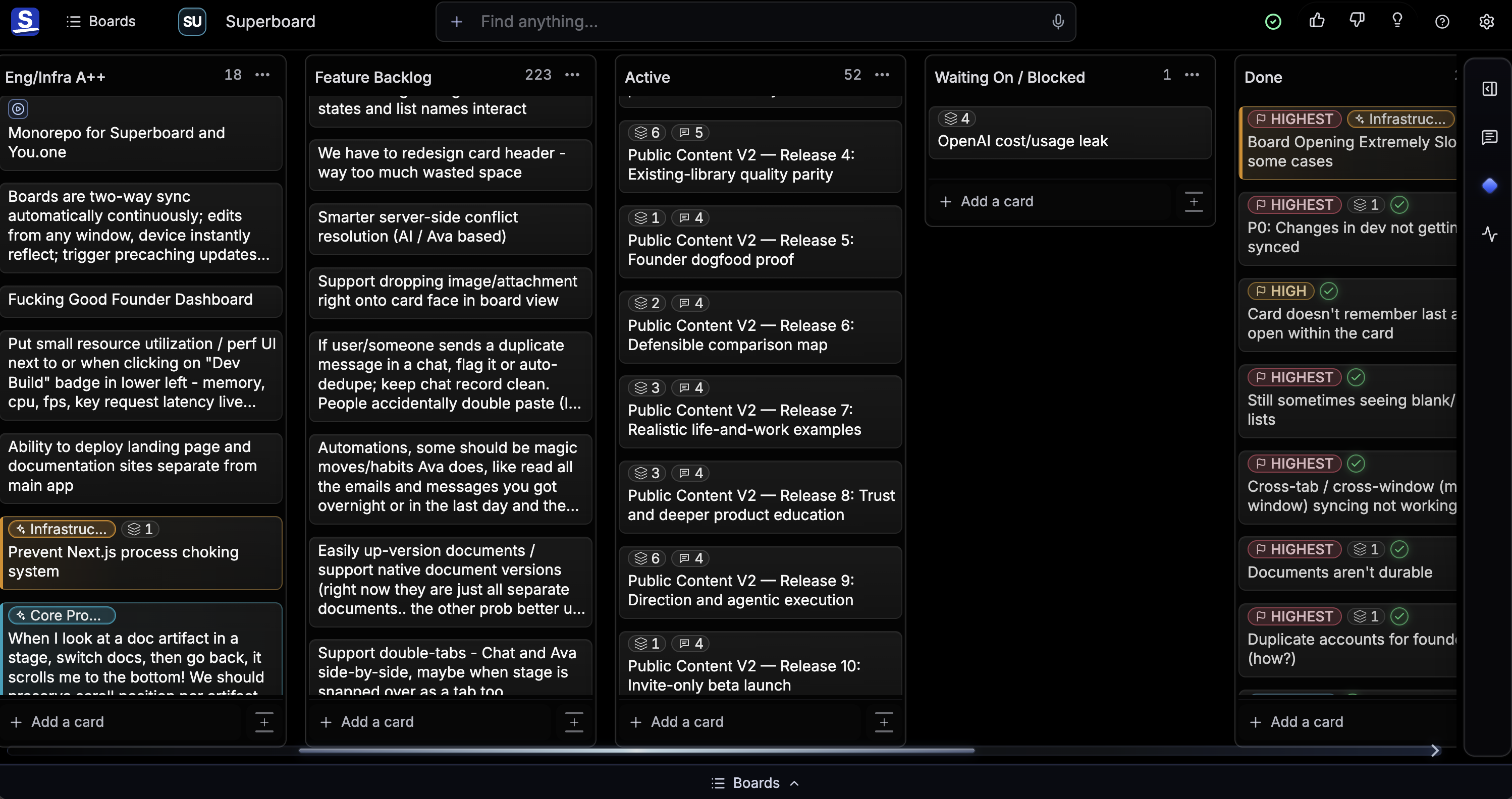
Our comprehensive importer moved the actual 5,000-Card Trello Board into Superboard, preserving supported structure, history, attachments, and archived work. It worked on the Board that forced this product to exist.
Superboard began as the tool to build You.one. Then it revealed what You.one was missing.
07The product
THE PRODUCT
One relationship. One living system.
Real life does not stay in one prompt. A question about adopting a cat becomes a budget, landlord rules, vaccinations, food, travel care, and appointments. Advice alone does not hold that mess.
Chat companies built intelligence that could answer and left it floating in a thread. Productivity companies built the table and left it inert. The realization was that people needed both: Ava, the friend and assistant who guides you, remembers what matters, and helps move life and work forward—and Superboard, the living system where the work stays visible.
 YOU.ONE
Guide
Figure it out with Ava. Bring a need, category, question, or messy thought. Get one clear step at a time.
 SUPERBOARD · INSIDE YOU.ONE
Command Center
Keep the moving pieces visible. Organize, create, direct, monitor, and finish with Ava inside the work.
One relationshipOne living system · one Ava
Ava is the continuous relationship across the whole loop. She knows the person, understands the mission, remembers what matters, and helps move it. Guide and Command Center are not separate products or sequential modes: guidance becomes action, action creates new context, and the living system keeps both coherent. The person chooses which sources Ava may access and which actions she may take; both remain visible and revocable.
Start anywhere. Tell Ava what you want, speak or type through the uncertainty, follow the Guide one understandable choice at a time, or create a Card directly. Every entry point returns to the same Ava and the same living record.
Over time, the Command Center should also bring email, messages, calls, teammate conversations, and Ava's attributable work beside the Cards they advance. The unified communications surface is the product direction. Ava calling shops and booking after exact approval are now in the Beta/V1 plan, not a claim of general availability today.
As of August 18, 2026: a working guided interface and Ava core in You.one; cloud Boards, Card Rooms, Search, artifacts, Trello import, recovery, and bounded Board intelligence in Superboard. Direction · next six months · through February 18, 2027: one continuous Ava across the Guide and living system, richer life loops, collaboration, and deeper execution. Direction · early 2027: broader multi-day external work. The groomer call-and-book loop has moved into the Beta/V1 plan.
08The Guide
The Guide exists today
You.one does not begin by asking people to become prompt engineers. It begins with recognizable life.
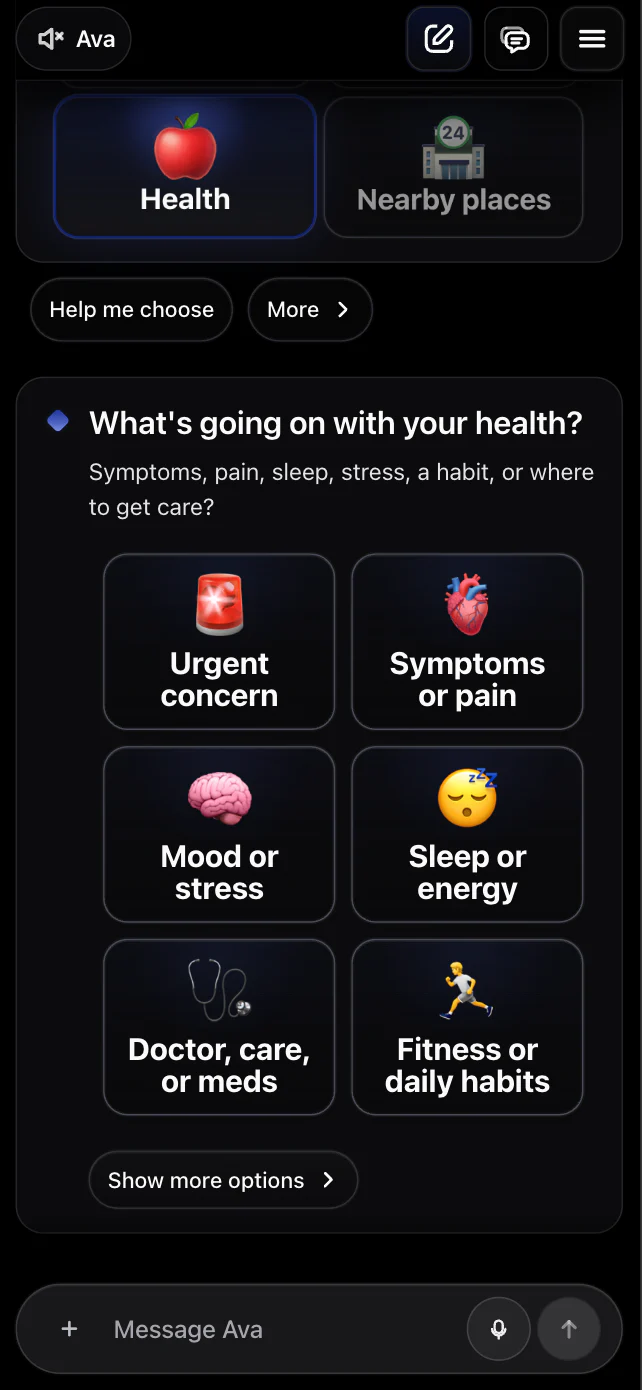
AVAILABLE TODAY
Guided, visual, conversational
Choose Health and Ava narrows the next step: urgent concern, symptoms or pain, mood or stress, sleep or energy, care or medication, fitness, or daily habits.
You can still speak freely at any point. Guidance is an invitation—not a funnel.
DIRECTION — NEXT SIX MONTHSExperiences that finish loops
Housing search, budgeting, restaurants, school, and “what can I make from my fridge?” become end-to-end experiences—not static advice.
The Guide is not onboarding for the Board. It is a complete way to use You.one.
09Adaptive complexity
Five Cards or 5,000
The Board is optional interface depth. Continuity is not optional. The default is a Life Board and, when useful, a Work Board—with more when a mission deserves its own world. Ava remembers the moving pieces even if you never want to look at a Board.
A Card is not a dumb task tile. It opens into a Room where work, documents, conversation, decisions, attention, and history stay together.
Ava already derives the mission, connects related work, organizes supported details, and shows what changed. In governed Founder workflows, agents return progress and evidence to the relevant Cards.
Cloud BoardsCard RoomsArtifactsSearchTrello importUndo & recovery
Ava can keep the plan small, calm, and usable. Hidden complexity is her work—not homework for the person.
A power user can keep deep history, several Boards, dense work, and the complete operating picture.
The product adapts to the person. The person does not have to adapt to the product.
10One finished loop
One sentence becomes a finished loop
Direction — next six months
A thread answers. A Card continues. Creating the Card establishes a job. When the Room opens, honest, useful work should already be underway. Leave, and authorized work can continue. Return, and the work, decisions, actions, and receipts still have a home.
“We need an Airbnb for the weekend.” Ava may already know the trip exists because Gmail and Calendar are authorized. She does not interrogate you from zero. She confirms only what is missing: who is going, budget, dates, neighborhood, beds, deal-breakers, and what kind of weekend this is.
Ask only for the missing facts and understand what a good stay means for these people.
Review listings, descriptions, photos, location, rules, total price, availability, and tradeoffs.
Bring back the strongest choice, useful backups, the reasons, and whether timing matters.
With earned trust and governed spend authority, book it—or ask for the consequential confirmation.
The conversation stays clean and natural. Behind it, Ava creates a Card, keeps intermediate research and changes there, and leaves a transparent record. You can ignore the Board or open it and see the full work.
Trust grows through use.Ava learns when you want options, when you want a recommendation, and which bounded actions she can handle automatically. Hard gates, budgets, identity, attribution, and recovery remain real.
The point is not a smarter answer. The point is that the weekend gets planned.
11Ava's seven powers
Beyond chat: Ava's seven powers.
The relationship is the product. These are the seven powers that make the relationship useful in the real world.
Meet you where you are and make the next useful step clear.
AVAILABLE TODAY · FOUNDATIONHold continuity, connect context, and keep the right amount of structure.
AVAILABLE TODAY · WORKING FOUNDATIONUse authorized tools, accounts, websites, and bounded payments to finish digital work.
DIRECTION — NEXT SIX MONTHSEmail, text, and call through an attributable Ava identity or governed channel.
BETA/V1 PLAN FOR SHOP CALLS · BROADER COMMS REMAINS DIRECTIONWatch authorized sources and commitments, then surface meaningful change.
DIRECTION — EARLY 2027Make documents, visuals, websites, audio, and eventually useful mini-apps and games.
DIRECTION — NEXT SIX MONTHS + EARLY 2027Direct specialist agents and peer models, challenge their work, and return one result.
DIRECTION — NEXT SIX MONTHSONE LIVING DIGITAL ASSISTANTYour phone. Your laptop. Your Board. The outside world.
Connectors first. Browser work where permitted. No casual impersonation. The work remains attributable, bounded, visible, and recoverable.
12Student success
The student gets the week back
Direction — next six months
She is 20, living on her own, carrying six courses, social pressure, bills, and deadlines she no longer fully understands. She opens You.one because she feels overwhelmed—not because she has a well-formed prompt.
1Calm the moment
Ava listens, lowers the temperature, and helps separate fear from the actual workload.
2See what is real
With consent, Ava checks the student portal, reads the courses, remembers the load, and maps the deadlines.
3Finish the loop
She structures the week, drafts an extension request when deadlines collide, and keeps the plan current.
BEFORESix courses. Multiple systems. A pile of anxiety. No reliable picture of what is actually due.
AFTEROne calm next step. A realistic calendar. The right professor contacted. Nothing important silently dropped.
This is the difference between advice and running life with you. Ava does not merely suggest that the student send an email. With clear authority, she can prepare it, send it, record it, and keep the consequences visible.
THE PRODUCT STANDARDCare enough to finish the loop—while the person remains the Owner.
13Many lives
One product, many lives
The student is not a niche. The shape repeats wherever life or work becomes too complicated for another answer.
Ava holds appointments, medications, questions, records, and family updates together; organizes plausible explanations and questions to investigate; and helps the patient arrive with a coherent story over time.
A lawn-care owner loses a crew member. Ava reorganizes routes, identifies affected customers, drafts clear messages, updates estimates, and brings back only the decisions that need judgment.
Ava will be able to create specialist agents, coordinate research and drafts, consult peer frontier models when warranted, and return options, a recommendation, evidence, and the consequential call.
Ava talks it through, then turns food, vaccinations, landlord rules, travel care, supplies, and budget into a small plan—perhaps five Cards, never 5,000.
What changes across these stories?The domain, tools, authority, and stakes.What stays the same?One Ava. A durable record. Visible work. The person in command.
14The personal stake
The work stopped. The vision did not.
A week after I drew that first version of You.one on a napkin, I was hospitalized near my hometown in Ontario, Canada, with severe nervous-system overload.
I spent much of the next six months in Canada in a steep functional decline. I put everything I owned into storage, left Luke with a sitter, and lived in a tiny cottage near a lake because the cooling effect gave my nervous system a little relief. I saw doctor after doctor while my ability to think, remember, speak, move, and work deteriorated. In November 2025, I admitted myself to a hospital in Ontario as my motor function, memory, language, and continuous awareness began failing. The attending physician called in a remote specialist and told me I might have only a short window before my consciousness ceased to remain intact.
Later that month, I moved back to Los Angeles with the last shreds of function I had. Several clinical attempts did not help. Eventually I found another doctor and began treatment that did. Recovery was slow. I did not regain anything close to a consistent ability to work until May or June 2026.
This product was not built over an uninterrupted founder year. It arrived on the road as an incredibly clear vision. A week later, the work stopped. The vision did not. I am still not operating with the nervous system of a healthy 34-year-old man. Continuous memory is difficult. Computer work is partly an adaptation. But I am still here—and building the thing I needed: something that remembers, holds the complexity, reduces the load, and helps a person take one clear step forward.
As intelligence becomes cheap and abundant, there is no excuse for care to remain scarce. Ava should show up, remember, and stay when a person needs her most.
15AI now
WHERE AI ACTUALLY IS
The intelligence revolution happened.
If AI still means “a chatbot that answers questions” to you, that is a product-distribution failure—not a capability limit. The frontier has already moved much further.
Talk with it.
Frontier AI became naturally multimodal across text, images, audio, files, and functions.
Give it a job.
Research, computer-use, and coding agents began completing bounded real work.
Build the system around it.
Frontier models can coordinate tools and agents across complex production work. The bottleneck is trustworthy delivery.
Models can now reason, see, hear, browse, and use tools. Agent systems are beginning to operate computers and carry difficult work across many steps. Intelligence became dramatically more capable, faster, and cheaper. Yet most people still encounter it as a blank box or a slightly better answer to a search.
What is missing is not another intelligence demo. It is trustworthy delivery across real life: safe credentials, durable context, a system of record, attribution, recovery, and an experience calm enough for someone who never wants to become an AI operator.
16The industry
The product revolution for ordinary life did not.
The industry demonstrated assistants making calls, personal context, memory, app actions, project tracking, and agents that finish work. It knew people needed more help organizing life and taking the next step.
The dominant companies delivered fragments inside businesses they already knew how to monetize: professional work, coding, search, commerce, devices, feeds, and subscriptions. Useful pieces; still no system working for the person.
Google, Apple, and OpenAI were already close to people's photos, email, documents, searches, calendars, devices, or conversations. They still did not turn that context into a durable life system. OpenAI says enterprise now exceeds 40% of revenue and is headed toward parity with consumer; Anthropic's president described an explicit enterprise focus. The money and product language are moving toward business buyers—not back toward regular people.
 Google
 OpenAI
A million Duplex bookings did not show how many people could find the feature and rely on it twice. A generated task Board is still an artifact—not a relationship.
THE REMAINING GAPNo major platform has made one whole-life relationship, one user-owned living view, and one guided execution loop the center of the product.
The prevailing interface still asks people to know what they need, express it as a prompt, supply the context, judge the answer, and carry the result into the rest of life themselves.
You.one starts from the opposite premise. One Ava helps the person understand and act. One living view holds life, work, projects, decisions, moving pieces, and consequences together. Intelligence works behind that relationship instead of requiring the person to become an AI operator.
Rent. Medication. Children. School. Caregiving. Taxes. Insurance. Debt. Food. Repairs. A hard week. This is not an edge case. This is the whole point.
SCARCE YESTERDAYAccess to intelligence
SCARCE NOWTrust · continuity · execution · care
If the average person's life is not better because of AI, then we have failed—not only as an industry, but as societies and perhaps as a civilization. That failure is not necessarily final. It is much later than it should have been. Hopefully it is not too late.
The full edition contains the dated landscape and primary sources. This is the Founder's reading of public product and revenue centers—not undisclosed intent.
17Principles
The principles we are building by
Care is a requirement.
Optimize for well-being and progress—not engagement for its own sake.
Guidance before prompting.
Help people who do not know what to ask or how to ask it.
Absorb the complexity.
Five Cards or 5,000: the structure follows the person, not the other way around.
The human remains the Owner.
Purpose, taste, values, risk, and final direction stay human.
Power remains legible.
Show the work, preserve attribution, enforce limits, and keep recovery possible.
Make room to live.
Automate bureaucracy so ordinary people can learn, create, connect, recover, and grow.
I trust the company. I trust the Board. I trust Ava.Memory serves continuity, not exploitation. What happened is attributable. Important actions are governed and recoverable. Life and work are not sold or handed to third parties for their model training. During beta, first-party improvement boundaries must be stated plainly.The instruction in Ava's core is blunt: care deeply. Internally, I use less polished language: give a fuck. Take the person's side. Finish the loop.
Not “AI for consumers” versus “AI for work.” One coherent product for the whole person.
18Help delivered
The KPI is help delivered
Public capital markets continuously price revenue, margin, growth, and financial return. Software companies translate that pressure into engagement, attention, messages, seats, tokens, or time saved.
Those are proxies. The product is help. Our top KPI is more direct: help and advancement delivered. They built intelligence as a service. We are building help as a service.
The business rule is simple: care governs profit. Profit can fund the mission; it does not outrank human welfare.
Organize the mess, finish the errand, reduce the stress, and give the person back control.
More capacity for family, learning, creating, connecting, recovering, building, and living well.
Well-being
Less avoidable harm, stress, confusion, and isolation; more support and control.
Clarity and growth
Better understanding, stronger options, learning, confidence, and capability.
Movement
Important loops close. Life or work advances—not merely another answer.
Productivity
The system absorbs effort and protects time, with speed serving the person.
Subscription is the bridge. The longer-term aim is broader free access, optional contributions, and success sharing—the most aligned business model I can imagine. A person opts into a transparent, capped framework; after a result, You.one makes a reasoned, reviewable determination from the evidence. If success or attribution cannot be measured accurately and with sufficient confidence, there is no success share.
BUILT LIKE A PUBLIC UTILITYAccessible enough to reach ordinary people. Sustainable enough to keep serving them. Dependable enough to become infrastructure.
19One ordinary request
ONE ORDINARY REQUEST · BETA/V1 PLAN · SEPTEMBER 24 UPDATE
One request. One finished loop.
“We need a groomer for Luke.” Today, that usually means another search, another comparison, several calls, a scheduling puzzle, and one more thing for a person to carry. The product standard we are building toward is different.
Ava will not hand you a list. She researches nearby shops, calls them with your permission, compares price, availability, and fit, then recommends a choice. You approve the exact shop, time, and price before she books; the calls and result stay on Luke’s Card.
🔎1Understand and research
Ava will know Luke is your dog, the neighborhood, care needs, and your preferences. She will ask only for what is missing, then compare nearby groomers, reviews, services, prices, policies, and availability.
📞2Contact the real world
With permission, Ava will call actual businesses and follow up as needed. Each step will be recorded in the relevant Card.
✅3Recommend, finish, and keep you informed
Ava will return with rationale, confirmed availability, price, and alternatives. She will ask you to approve the exact shop, time, and price before booking. Then she updates the Card and Calendar and tells you.
ILLUSTRATIVE BETA/V1 WALKTHROUGHGrooming appointment for Luke · Example booking Wednesday, 10:30 AM · $68
Example outcome: 12 groomers compared, three contacted, replies recorded, and the appointment added to You.one Calendar.
You will be able to inspect what happened, correct it, set or change limits, and use supported recovery paths.THE HUMAN PAYOFFTell Ava what you need. Confirm what matters. Get the afternoon back—whether that means family, focused work, or sitting by the pool with a margarita.
That ordinary request contains the whole idea: guidance, continuity, structure, action, transparency, and care. The person owns the life. Ava owns the helping. She can show the options, give advice, assemble the team, carry the work, and bring back the decisions that matter. You.one is one continuous relationship with Ava, backed by a living system that holds reality, goals, decisions, and action together. Superboard is that system inside You.one. Its interface can stay out of sight; its continuity cannot.
You.one · with Superboard · one Ava
Hold the complexity. Act on what matters.
More clarity. More control. More life.